What unreliable AI actually costs
The cost of AI hallucinations or near-miss outputs doesn’t show up as a clear line item. Value is lost through hours spent rechecking, reworking, and re-prompting on outputs.
The data this year shows that a majority indicate trusting AI at various levels, and 48% specifically trust it when they can easily verify the AI output. When rating the importance of being able to quickly check these sources while working, the top-rated sources were code repos, customer or sales support docs, and internal documentation.
This makes sense. AI tools can increase efficiency by handling routine work well enough to make it worth keeping in a workflow. But the outputs aren't quite reliable enough for harder tasks when there is a risk of damaging or expensive errors. This is why usage continues to increase while confidence remains conditional.
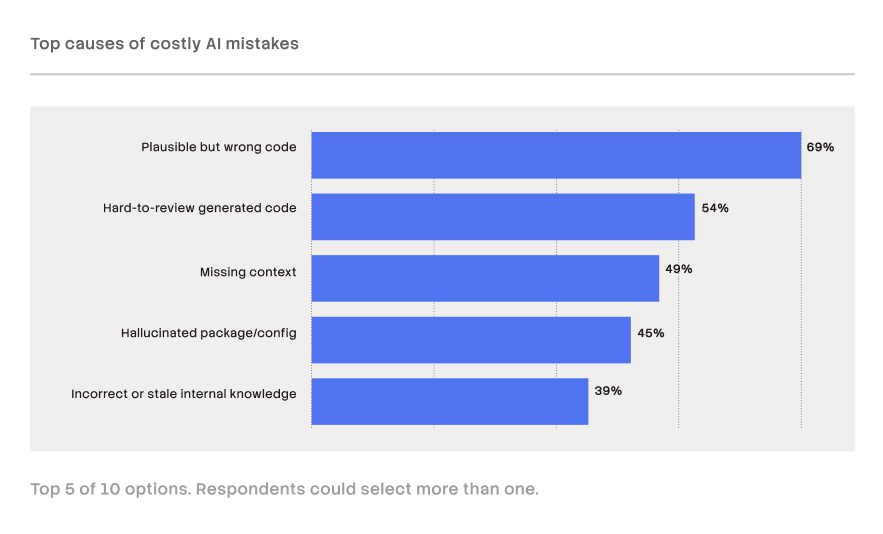
The top disruptive issues caused by AI in the workplace are plausible-but-wrong code, hard-to-review code, and missing context. Poor debugging paths and security or privacy issues stemming from AI are additional sources of lost team time due to unreliable AI responses. Further complicating things for teams, incorrect outputs that are prematurely relied on often get caught later in the review process or after something has already been shipped and breaks, causing more rework and delays.
These AI frustrations eventually become a budget problem. When incorrect outputs, hallucinations, and slow reviews pile up, increased work time takes away from the productivity gains an AI tool was meant to deliver. When net gains can’t be shown, it’s hard to justify value or keep working on a project that isn’t leading to the desired outcome fast enough.