REST API
Our robust API (built on the OpenAPI “Swagger” spec) and SDK allow you to integrate the apps you’re using. Even if they’re homegrown.
Modernize your SDLC with Stack Internal
Power teams and AI agents with trusted organizational knowledge across every stage of your SDLC.
Customers trust Stack Internal as their knowledge platform
Monthly users documenting knowledge in Stack Internal (2025)
Meaningful customer interactions in Stack Internal (2025)
Of expert engineering capacity recovered per week by global software intelligence company
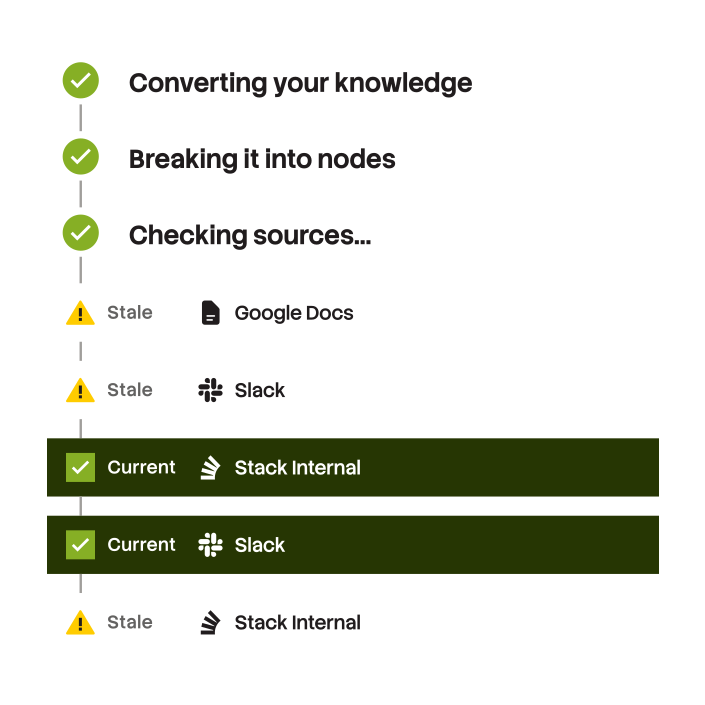
Critical technical context, often outdated or inconsistent, lives across disconnected systems, making it difficult for your team, AI tools, and search systems to know which answers are current and reliable.
Stack Internal captures and converts that enterprise data into structured, durable, and human-verified knowledge.
Historical context and new learnings build a reliable memory for technical teams and AI agents.
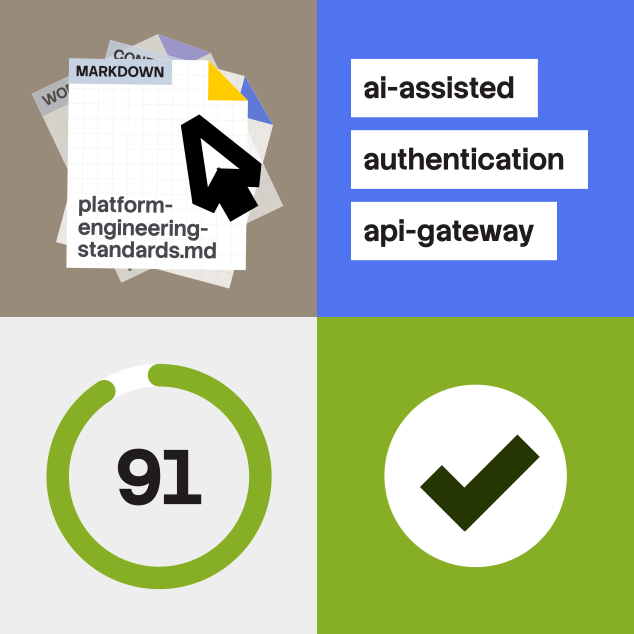
Codebase and architecture decisions are unique to every organization.
Effective planning, risk identification, and design require developers and agents to remain grounded in up-to-date technical context and consistent coding standards.
Stack Internal delivers the current, authoritative context your teams and agents need to make decisions with confidence.
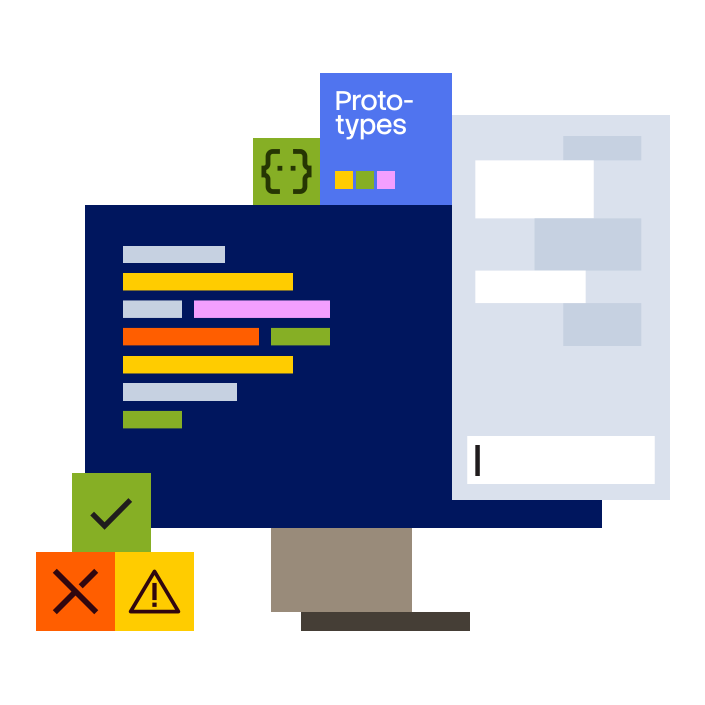
AI agents can generate "technically" correct code, but still require organizational context or human review to deliver production-ready results.
Stack Internal delivers validated context and company-specific logic (like which internal libraries to use or standard authentication patterns) to both developers and AI agents, ensuring confidence in the code you deploy.
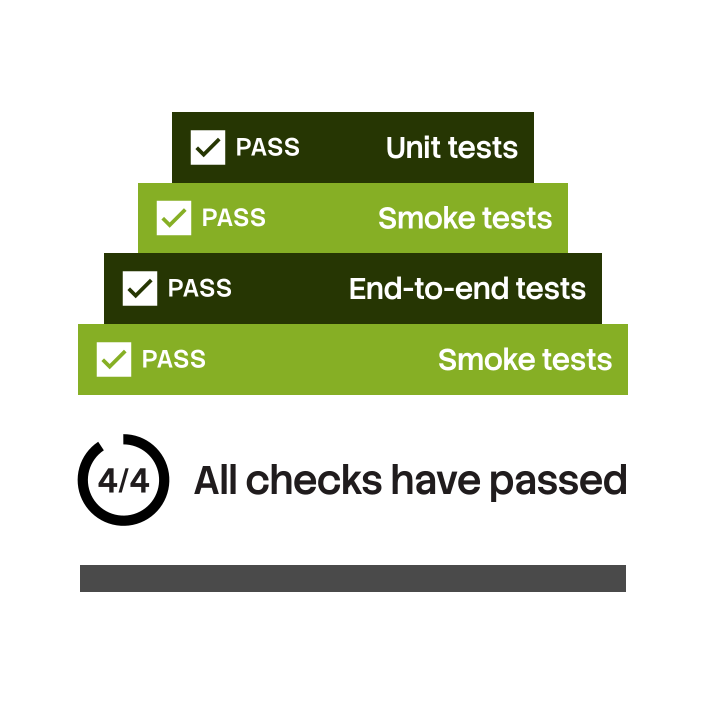
Improving speed-to-market depends on your SDLC working as intended.
Effective testing requires access to system requirements, undocumented behaviors, edge cases, and historical bugs.
Stack Internal gives AI agents access to historical testing knowledge, incident postmortems, failure modes, and QA conventions, accelerating testing and reducing developer review fatigue without sacrificing quality.
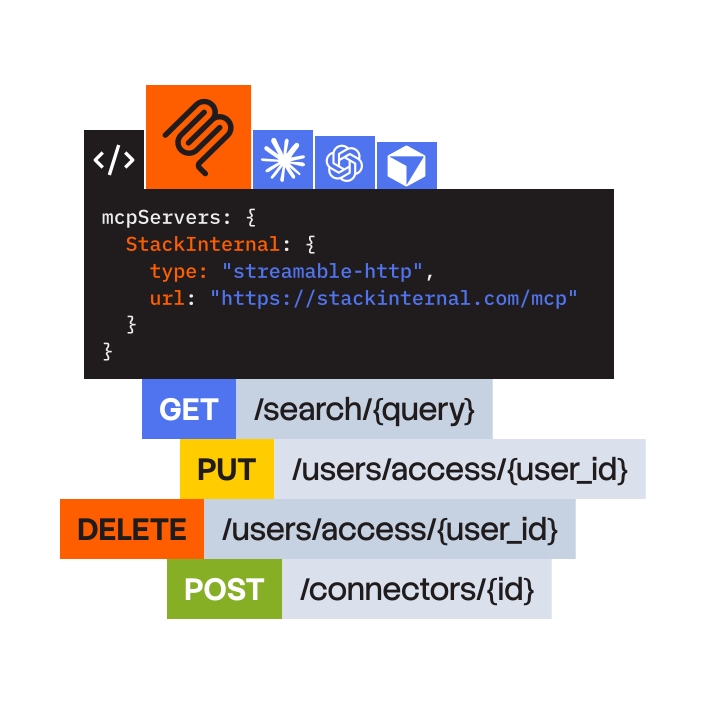
Incident response offers significant value for an agentic SDLC by reducing mean time to resolution (MTTR).
But success requires agents to understand system design, recent changes, and historical fixes. Stack Internal provides organizational context through MCP (or an API for custom applications), keeping technical knowledge current.
Integrations
Our robust API (built on the OpenAPI “Swagger” spec) and SDK allow you to integrate the apps you’re using. Even if they’re homegrown.
Capture and store critical context from Slack
Ground AI assistants and coding agents in your trusted Stack Internal knowledge.
Stack Internal continuously captures knowledge with organizational context,
trust scoring, and validation - making dev outputs more accurate and reliable.
Teams manually search fragmented tools for institutional knowledge
AI agents are grounded in expert-validated context to improve reliability
Planning depends on slow, manual cross-team coordination
Fragmented knowledge is centralized, keeping devs in flow and out of chat threads
Senior engineers lose capacity explaining legacy architecture "why"
Historical architecture knowledge surfaces directly within the IDE
Static wikis go stale, creating unverified technical debt
Delivery accelerates by cutting time to first commit
Critical context remains trapped in private chat threads
AI-generated code reflects validated organizational standards
Asked by development teams, answered by us.
The platform acts as a curation engine, automatically ingesting and storing knowledge with trust built-in. The trust system is constantly evaluating if that knowledge is reliable, current, authoritative, and safe to use. With automatic Subject Matter Expert validation only when there’s critical gaps.
The MCP server connects AI assistants and coding agents like Claude and Cursor to your trusted knowledge, and can read from Stack Internal without breaking focus.
Stack Internal platform offers API and MCP server for custom integrations, as well as connectors for your Stack Internal community, Google Docs and Slack channels.
Stack Internal platform supports connectors for your Stack Internal community, Google Docs and Slack channels that automatically imports critical context from your distributed tools.
Subject Matter Expert auto-detection stays accurate as your organization interacts with the platform over time and surfaces the right expert to the right topic. You also have the option to manage them manually.